 EN
EN

1. Hour-by-Hour Recovery Timeline
Understanding what to expect immediately following an endolaser procedure ensures a predictable and stress-free healing window. Because the entry points are typically less than a millimeter in size, the external skin remains largely undisturbed.
Post-Procedure Milestones
-
Hours 2 to 4: As the localized tumescent anesthesia gradually wears off, patients typically experience a warm, mild throbbing sensation in the treated zone. This indicates that the thermal energy has reached the therapeutic target to prompt collagen tightening.
-
Hour 6: The acute warmth subsides into a mild tightness. Swelling during this initial window can be safely managed by applying cold compresses for 10-minute increments.
-
Days 1 to 2: Localized edema (swelling) peaks and begins to trend downward. Most individuals feel entirely comfortable returning to daily administrative desk work or low-impact routines by the next morning.
-
Day 4: The micro-puncture sites close completely, skin tone normalizes, and the underlying tissue transitions into the deeper phases of structural remodeling.
Clinical Aftercare Tip: Sleeping with the head elevated on two pillows for the first 48 hours is highly effective at minimizing peak swelling and accelerating the fluid clearance process.
2. Why Wavelength Selection Limits Tissue Trauma
The exceptionally short recovery curve associated with advanced endolaser procedures is directly tied to optical physics and wavelength synergy.
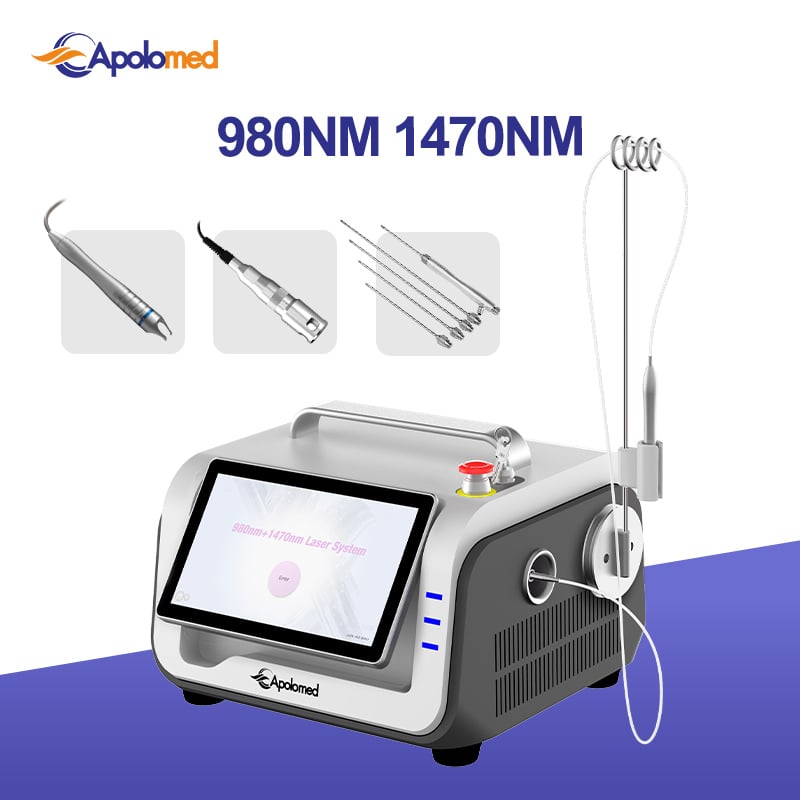
Modern platforms, such as those engineered by Apolo Med, combine two specific laser frequencies to optimize internal tissue interactions:
-
The 980 nm Wavelength: Focuses heavily on hemoglobin, providing immediate coagulation as it passes through the tissue. This stops internal bleeding before it can manifest as deep bruising or prolonged discoloration, which is a game-changer for reducing edema.
-
The 1470 nm Wavelength: Targets water in the fat cells and connective tissue. It liquefies fat and contracts collagen without creating a large zone of non-specific thermal damage.
Because the energy is so precisely targeted, the body does not have to clear a massive area of non-specific tissue damage, which drastically reduces the length of post-treatment inflammation compared to legacy laser designs.
3. Managing Expected Side Effects and Protocols
While endolaser protocols boast an excellent safety profile, managing normal inflammatory responses is a critical component of patient compliance and satisfaction.
Expected Clinical Manifestations
-
Edema (Swelling): Standard inflammatory response to sub-dermal thermal remodeling. It typically peaks at 24 hours and resolves independently within 2 to 3 days.
-
Temporary Firmness: Induced by the organization and lymphatic clearance of liquefied adipocytes. It smooths out uniformly within 7 to 10 days and can be assisted by gentle lymphatic massage starting on Day 3.
-
Altered Sensation: Transient neural irritation in areas where superficial nerves reside. This almost always resolves completely within 2 to 4 weeks as the sub-dermal layers stabilize.
Because the 1470 nm wavelength features minimal melanin absorption, the risk of pigmentary alterations is exceptionally low across Fitzpatrick skin types II through V, provided that pulse settings are carefully tailored to the patient's specific skin thickness.
4. Comparing Recovery Landscapes
When planning aesthetic interventions, analyzing the recovery-to-result ratio allows clinic owners and patients to align expectations accurately.
-
Surgical Facelifts: Require general anesthesia, invasive incisions, suture removal, and a full month of healing before the face assumes a natural contour. Strenuous activities are strictly prohibited for 4 to 6 weeks.
-
Topical & Surface RF Devices: Require zero downtime, but often produce subtle, unpredictable results that fail to satisfy patients experiencing moderate to severe structural laxity.
-
Endolaser Therapies: Deliver high-satisfaction structural tightening comparable to a mini-lift while operating on a highly accelerated recovery timeline. Desk workers routinely resume professional activities within 24 to 48 hours, and heavy exercise can safely be reintroduced after one week.
5. Conclusion
Endolaser procedures successfully bridge the gap between non-invasive topicals and aggressive operating room surgeries. By utilizing specialized dual-wavelength outputs and real-time internal temperature monitoring, the technology delivers reliable skin tightening and localized fat reduction on a timeline that neatly fits into active modern lifestyles. For practices worldwide, adopting these refined sub-dermal laser parameters ensures a predictable, safe, and easily managed recovery experience that drives long-term patient confidence.