 EN

How Fractional CO2 Laser Improves the Appearance of Surgical Scars
Surgical scars develop as part of the body's natural wound-healing process. Although most scars gradually become softer and less noticeable, some may remain raised, firm, uneven, or visibly different from the surrounding skin. These changes can affect both skin appearance and flexibility.
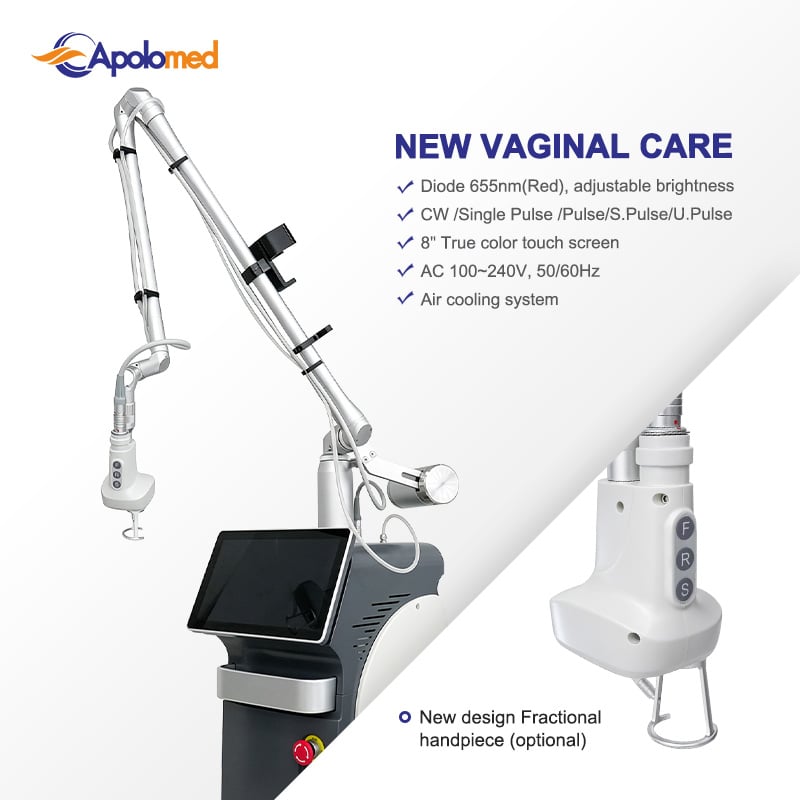
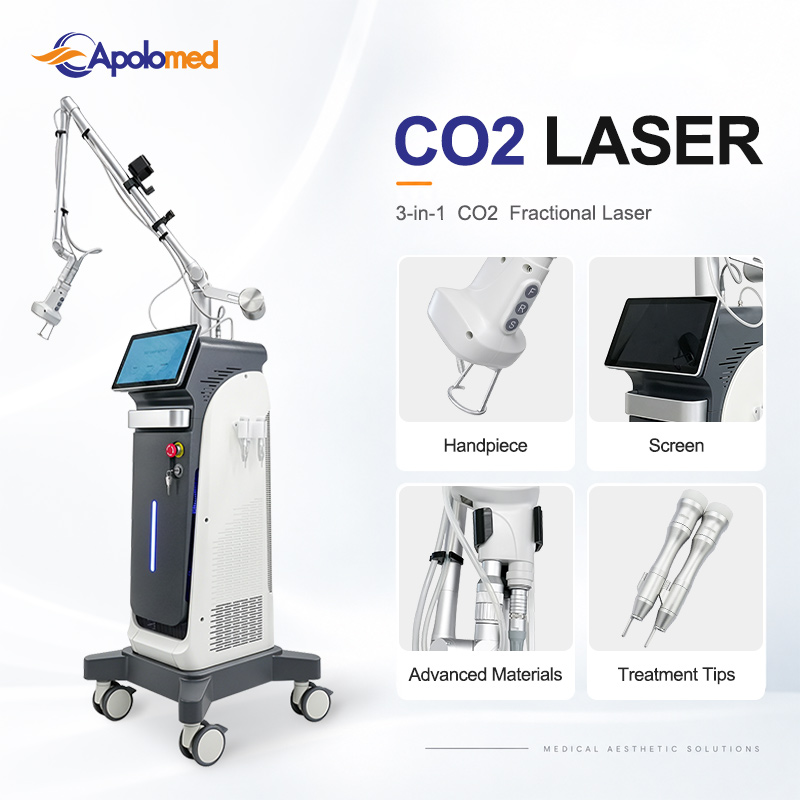
Fractional CO2 laser is an ablative laser technology commonly used in dermatology and aesthetic medicine to improve selected types of scars. By creating controlled microscopic treatment zones, it stimulates tissue repair and collagen remodeling while leaving surrounding areas untreated. This approach can help refine scar texture, improve pliability, and reduce the visibility of certain surgical scars.
Understanding how fractional CO2 laser works, what results patients can realistically expect, and which scars may respond best is essential for selecting an appropriate treatment approach.
How Fractional CO2 Laser Works on Surgical Scars
Controlled Ablation of Scar Tissue
Fractional CO2 laser operates at a wavelength of 10,600 nm, which is strongly absorbed by water in skin tissue. When laser energy reaches the treatment area, it generates heat and creates microscopic columns of controlled tissue ablation.
Depending on the device and selected treatment parameters, these columns may extend through the epidermis and into different depths of the dermis. The surrounding untreated tissue remains relatively intact and provides a source of cells that participate in the natural healing process.
Unlike traditional fully ablative CO2 laser resurfacing, fractional treatment does not remove the entire surface layer across the treatment area. Instead, it distributes microscopic treatment zones across the skin, allowing treated and untreated areas to coexist.
For surgical scars, this controlled injury can help improve surface irregularities and stimulate the remodeling of scar tissue. However, the depth and density of treatment must be adjusted according to scar thickness, location, skin type, and individual healing characteristics.
Stimulation of Collagen Remodeling
Collagen is a major structural protein in the skin and plays an important role in wound healing. During scar formation, collagen fibers may become excessively dense, irregularly arranged, or poorly aligned, contributing to changes in scar thickness and flexibility.
Fractional CO2 laser creates controlled thermal injury that activates the skin's wound-healing response. Fibroblasts participate in tissue repair and extracellular matrix remodeling, while new collagen is gradually produced and reorganized.
These processes may improve scar texture, softness, and pliability over time. Some patients may also notice a reduction in surface irregularities and a smoother transition between the scar and surrounding skin.
The remodeling process does not happen immediately. Collagen changes develop gradually over several weeks and months, and the final outcome depends on scar characteristics, treatment settings, and individual biological responses.
Fractional CO2 laser should therefore be considered a scar-improvement treatment rather than a method of completely removing scar tissue.
Microthermal Zones and the Wound-Healing Process
One of the main characteristics of fractional CO2 laser technology is its ability to create microscopic treatment zones, often referred to as microthermal zones (MTZs).
These zones are separated by areas of untreated tissue. The untreated areas help support cellular migration and tissue repair following laser exposure. In the treated areas, controlled thermal injury activates a wound-healing response involving inflammatory signaling, cellular activity, and extracellular matrix remodeling.
The depth, diameter, and density of these treatment zones depend on several factors, including laser energy, pulse duration, treatment density, and the specific device design.
Higher treatment intensity may produce deeper or more extensive tissue injury, but it can also increase recovery time and the risk of adverse reactions. Lower-intensity treatment may be appropriate in selected cases where a more conservative approach is preferred.
There is no single energy setting suitable for every surgical scar. Professional assessment and device-specific protocols are essential for balancing treatment effectiveness with patient safety.
Clinical Benefits of Fractional CO2 Laser for Surgical Scars
Improving Scar Height and Surface Irregularities
Some surgical scars become raised, firm, or uneven during the healing process. Fractional CO2 laser may help improve these characteristics by creating controlled tissue injury and encouraging collagen remodeling.
Treatment can gradually refine surface irregularities, soften scar tissue, and improve the transition between the scar and surrounding skin. These changes may make the scar less noticeable in everyday situations.
The degree of improvement varies considerably. Scar age, thickness, anatomical location, and the presence of excessive collagen formation can all influence treatment response.
Clinical evaluation tools such as the Vancouver Scar Scale (VSS) may be used to assess changes in scar height, pigmentation, vascularity, and pliability. However, outcomes should not be reduced to a universal improvement percentage because different studies use different patient groups, treatment protocols, and assessment methods.
Refining Skin Texture and Pigmentation
Surgical scars may also have uneven surface textures or color differences compared with surrounding skin. Fractional CO2 laser primarily targets tissue remodeling and surface texture rather than directly treating every type of pigmentation problem.
By promoting epidermal renewal and dermal remodeling, treatment may improve certain textural irregularities. However, pigmentation changes can be more complicated, particularly in individuals with darker skin phototypes or a history of post-inflammatory hyperpigmentation (PIH).
Fractional ablative CO2 laser can itself trigger temporary or persistent pigmentation changes. Therefore, conservative treatment settings, appropriate treatment intervals, and careful postoperative care are important.
For patients with Fitzpatrick skin types III–VI, clinicians should carefully evaluate pigmentation risk and consider whether alternative or complementary treatments may be more appropriate.
Realistic Outcomes: Scar Improvement vs. Complete Removal
Fractional CO2 laser can improve the appearance of selected surgical scars, but it cannot completely erase them.
Scar tissue forms through a natural biological process, and its structure differs from that of normal, uninjured skin. Even after successful treatment, some differences in color, texture, thickness, or flexibility may remain.
Realistic treatment goals include:
-
Improving uneven scar texture and surface irregularities.
-
Reducing the prominence of selected raised scars.
-
Improving scar softness and pliability.
-
Creating a smoother transition between scar tissue and surrounding skin.
-
Making the scar less noticeable in daily life.
Treatment outcomes depend on scar maturity, morphology, location, skin phototype, and individual healing responses. Multiple sessions may be considered, but the number and timing should be determined through professional assessment rather than a fixed treatment schedule.
Who Is a Suitable Candidate for Fractional CO2 Laser Scar Treatment?
Scar Type, Healing Status, and Skin Phototype
Fractional CO2 laser may be considered for selected patients with fully healed surgical scars that have persistent textural irregularities, uneven surfaces, or reduced pliability.
However, not all scars respond equally well.
Mature, flat, or mildly raised surgical scars may be considered for resurfacing and texture improvement. Hypertrophic scars and keloids require more careful evaluation because their underlying biology involves excessive scar formation. Fractional CO2 laser alone may not be sufficient for these conditions, and combination treatment may be considered.
The timing of treatment is also important. Some clinical approaches consider early intervention in selected postoperative scars, while other cases are treated after the scar has matured. Treatment should only begin when the wound has healed appropriately and a qualified professional has confirmed that laser exposure is suitable.
Skin phototype is another important consideration. Individuals with lighter skin phototypes may generally have a lower risk of post-inflammatory hyperpigmentation following ablative laser procedures. However, patients with darker skin are not automatically unsuitable. Their treatment requires more careful parameter selection, risk assessment, and postoperative monitoring.
Patient Satisfaction and Long-Term Results
Patient satisfaction depends on whether treatment outcomes match realistic expectations. Improvements in scar texture and pliability may develop gradually, so patients should not expect immediate or complete scar removal.
After treatment, the skin requires time to recover and remodel. The final appearance may continue to change over several months as collagen is reorganized.
Long-term results can vary depending on scar characteristics, treatment response, sun exposure, and postoperative care. Gentle skincare and appropriate sun protection are important during recovery and after the skin has healed.
For some patients, additional treatment sessions or complementary scar-management approaches may be considered. Regular follow-up allows clinicians to evaluate progress and determine whether further treatment is appropriate.
FAQs
1. How effective is fractional CO2 laser for surgical scars?
Fractional CO2 laser can improve the appearance of selected surgical scars by refining surface irregularities and stimulating collagen remodeling. Results vary according to scar type, thickness, location, skin phototype, and treatment settings. It improves scars rather than completely removing them.
2. How long does it take to see results?
Initial changes may become noticeable after the skin has recovered, but collagen remodeling takes longer. Improvements in scar texture and pliability may continue to develop over several weeks or months. The timeline varies between individuals.
3. How many fractional CO2 laser sessions are needed?
The number of sessions depends on scar characteristics and treatment response. Some patients may benefit from multiple sessions, while others may require a different treatment approach. Session frequency should be determined by a qualified professional.
4. Is fractional CO2 laser suitable for all skin types?
Fractional CO2 laser can be used in different skin phototypes, but the risk of post-inflammatory hyperpigmentation is higher in darker skin. Careful patient selection, conservative treatment parameters, and appropriate aftercare are important.
5. Can fractional CO2 laser completely remove surgical scars?
No. Fractional CO2 laser can improve scar texture, thickness, and pliability, but it cannot restore scarred tissue to completely normal skin. The goal is to make the scar less noticeable and improve its overall appearance.
6. Is fractional CO2 laser suitable for keloids?
Keloids require specialized assessment because they involve abnormal scar tissue growth beyond the original wound boundaries. Fractional CO2 laser alone is generally not considered a universal treatment for keloids. Other treatments or combination approaches may be more appropriate.
Table of Contents
- How Fractional CO2 Laser Improves the Appearance of Surgical Scars
- How Fractional CO2 Laser Works on Surgical Scars
- Clinical Benefits of Fractional CO2 Laser for Surgical Scars
- Realistic Outcomes: Scar Improvement vs. Complete Removal
- Who Is a Suitable Candidate for Fractional CO2 Laser Scar Treatment?
- Patient Satisfaction and Long-Term Results
-
FAQs
- 1. How effective is fractional CO2 laser for surgical scars?
- 2. How long does it take to see results?
- 3. How many fractional CO2 laser sessions are needed?
- 4. Is fractional CO2 laser suitable for all skin types?
- 5. Can fractional CO2 laser completely remove surgical scars?
- 6. Is fractional CO2 laser suitable for keloids?