 EN

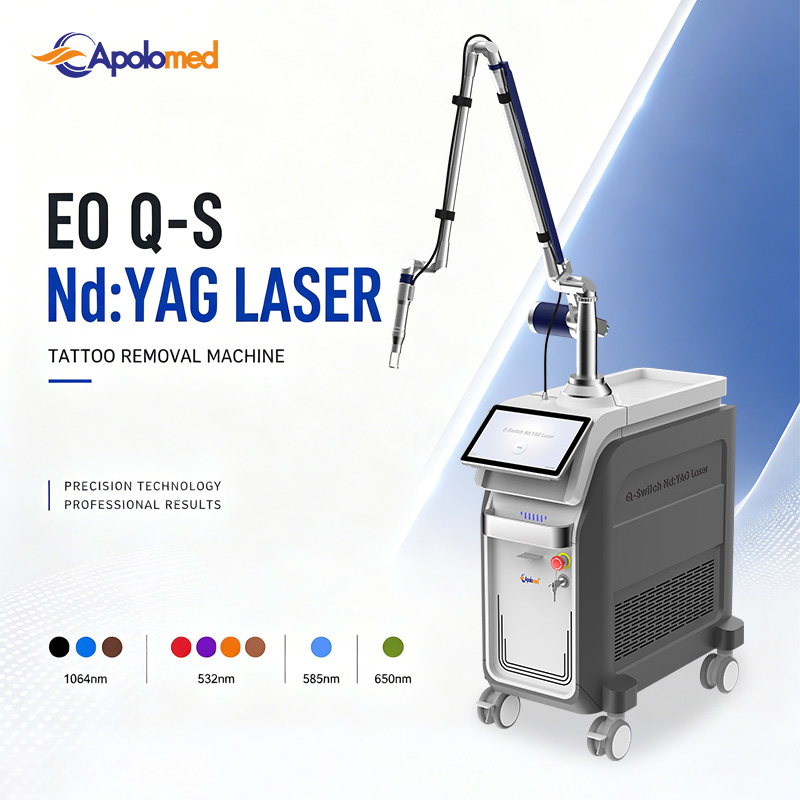
How Nd Laser Targets Dark Spots: Treatment Mechanisms and Safety Advantages
Dark spots are common skin concerns caused by different factors, including sun exposure, aging, inflammation, and changes in melanin production. Depending on their depth and underlying cause, pigmented lesions may require different treatment approaches.
The Nd laser is widely used in aesthetic dermatology for selected pigmentation treatments. Its 1064 nm wavelength offers relatively deep tissue penetration and lower absorption by epidermal melanin compared with shorter wavelengths. This makes it a useful option for targeting certain deeper pigment structures, particularly when treating patients with darker skin phototypes.
However, treatment effectiveness depends on the type of pigmentation, laser configuration, pulse duration, and individual skin characteristics. Understanding these factors helps practitioners select appropriate treatment parameters while minimizing unwanted skin reactions.
How Nd Laser Targets Dark Spots: Precision Mechanism and Safety Advantages
Selective Pigment Targeting with the 1064 nm Wavelength
The Nd laser operates at a fundamental wavelength of 1064 nm, which penetrates relatively deeply into the skin compared with shorter wavelengths. It has lower absorption by epidermal melanin than wavelengths such as 532 nm, allowing more laser energy to reach deeper pigment structures.
In Q-switched mode, the laser delivers very short pulses with high peak power. Melanin-containing structures absorb the energy, generating photomechanical and photothermal effects that can fragment pigment particles into smaller components. These fragments are subsequently processed and gradually cleared through the body's natural mechanisms.
The 1064 nm wavelength is particularly useful for selected dermal or mixed pigmentation conditions. Its relatively low epidermal melanin absorption provides an advantage when treating patients with darker skin phototypes, although it does not eliminate the possibility of epidermal injury or pigmentation changes.
Treatment precision also depends on factors such as spot size, pulse duration, fluence, and the characteristics of the target lesion. Appropriate parameter selection helps balance pigment clearance with surrounding tissue protection.
Optimizing Pulse Duration and Fluence for Pigment Treatment
Pulse duration plays an important role in how Nd laser energy interacts with pigmented tissue.
Q-switched Nd systems deliver nanosecond pulses that concentrate energy within a very short period. This rapid energy delivery can produce photoacoustic effects that fragment pigment particles while limiting the spread of thermal energy into surrounding tissue.
However, treatment parameters should not be standardized across all pigmentation conditions. The appropriate fluence, spot size, pulse duration, and treatment density depend on the specific device, pigment depth, lesion type, and skin phototype.
Excessive energy may increase the risk of blistering, pinpoint bleeding, post-inflammatory hyperpigmentation, or hypopigmentation. Insufficient energy may produce limited pigment fragmentation and unsatisfactory improvement.
For this reason, treatment should follow device-specific protocols and be adjusted according to clinical assessment and tissue response rather than relying on a universal fluence range.
Nd Laser Safety Across Skin Types: Considerations for Fitzpatrick IV–VI
Lower Epidermal Melanin Absorption at 1064 nm
The 1064 nm wavelength has lower melanin absorption than shorter wavelengths such as 532 nm, 694 nm, and 755 nm. This allows it to penetrate more deeply while reducing the amount of energy absorbed by epidermal melanin.
This characteristic makes 1064 nm Nd laser an important option for selected pigmentation treatments in patients with Fitzpatrick skin types IV–VI.
Nevertheless, lower melanin absorption does not mean complete protection against pigmentary complications. Excessive energy, repeated treatments, inflammation, and inappropriate treatment intervals may still cause post-inflammatory hyperpigmentation or hypopigmentation.
The risk is particularly important in patients with melasma, who may experience recurrence or worsening pigmentation after aggressive laser treatment.
A careful assessment of skin phototype, pigmentation history, lesion characteristics, and previous treatment response is therefore essential before selecting a laser protocol.
Comparing Nd, Alexandrite, and Ruby Laser Wavelengths
Different laser wavelengths interact with melanin in different ways. Shorter wavelengths are generally absorbed more strongly by melanin, while longer wavelengths penetrate more deeply and have relatively lower epidermal melanin absorption.
| Laser Type | Wavelength | Relative Melanin Absorption | General Characteristics |
|---|---|---|---|
| Nd | 1064 nm | Lower | Deeper penetration; useful for selected dermal pigmentation |
| Alexandrite | 755 nm | Higher than 1064 nm | Greater melanin absorption; suitable for selected pigment targets |
| Ruby | 694 nm | Higher than 1064 nm | Strong melanin absorption; requires careful selection in darker skin |
The 1064 nm Nd laser is often preferred when epidermal melanin absorption needs to be minimized. However, it is not universally the safest or most effective option for every pigmented lesion.
For example, superficial epidermal pigmentation may respond more effectively to selected shorter-wavelength treatments. The choice of technology should depend on lesion diagnosis, pigment depth, skin phototype, and individual risk factors.
Balancing Safety and Efficacy: When Nd Laser May Underperform
Limitations in Treating Superficial Pigmentation
Although 1064 nm Nd laser offers deeper penetration, its relatively low melanin absorption can limit its effectiveness for certain superficial pigmented lesions.
Some epidermal pigmentation, including selected solar lentigines and superficial brown spots, may respond better to shorter wavelengths such as 532 nm. These wavelengths are more strongly absorbed by epidermal melanin, allowing more direct targeting of superficial pigment.
However, stronger melanin absorption also increases the potential for epidermal injury, particularly in darker skin phototypes.
The 532 nm wavelength therefore requires careful patient selection and parameter adjustment. In some cases, other treatment options may be more appropriate.
The key is to identify whether pigmentation is predominantly epidermal, dermal, or mixed before selecting a wavelength. Using 1064 nm for every dark spot may lead to incomplete clearance, while selecting a shorter wavelength without considering skin phototype may increase adverse reaction risks.
Special Considerations for Melasma and Post-Inflammatory Hyperpigmentation
Melasma and post-inflammatory hyperpigmentation require a different treatment strategy from isolated sunspots or other stable pigmented lesions.
Low-fluence Q-switched 1064 nm Nd laser, commonly referred to as laser toning, has been investigated for melasma management. Some studies report improvements in pigmentation, but recurrence, rebound hyperpigmentation, and mottled hypopigmentation remain important concerns.
Laser treatment should therefore not be presented as a universal first-line solution for melasma. Photoprotection and appropriate topical management remain important components of long-term care.
For post-inflammatory hyperpigmentation, clinicians should first identify and manage the underlying inflammation. Laser treatment may be considered in selected cases, but additional irritation can potentially worsen pigmentation.
Minimizing Real-World Risks: Best Practices for Nd Laser Dark Spot Treatment
Safe Nd laser treatment requires more than selecting the correct wavelength. Patient evaluation, device settings, treatment technique, and postoperative care all influence the outcome.
Important considerations include:
-
Patient assessment: Identify the type, depth, and cause of pigmentation before treatment. Suspicious or undiagnosed pigmented lesions should receive appropriate medical evaluation rather than being treated as cosmetic dark spots.
-
Test spots: Consider test treatments in patients with higher pigmentation risk. The response should be evaluated over an appropriate observation period rather than relying only on immediate skin changes.
-
Parameter selection: Adjust fluence, spot size, pulse duration, and treatment density according to the device and target lesion.
-
Cooling and skin protection: Use appropriate cooling methods when required by the device and treatment protocol.
-
Eye protection: Patients and clinical personnel must use protective eyewear suitable for the specific laser wavelength and operating environment.
-
Treatment documentation: Record baseline pigmentation, skin phototype, treatment parameters, and follow-up observations to monitor changes and identify potential complications.
After treatment, patients should follow professional aftercare instructions. Gentle skincare and broad-spectrum sunscreen with SPF 30 or higher help protect recovering skin. Consistent sun protection is especially important for patients with melasma or a history of post-inflammatory hyperpigmentation.
Follow-up should be scheduled according to the treatment protocol and individual skin response. Delayed pigmentation changes may require additional observation even when the immediate treatment reaction appears mild.
FAQs
1. What is the main advantage of the 1064 nm Nd laser for dark spots?
The 1064 nm wavelength penetrates relatively deeply and has lower absorption by epidermal melanin than shorter wavelengths. This makes it useful for selected deeper pigmented lesions and certain patients with darker skin phototypes.
2. How does the Nd laser break down pigmentation?
Q-switched Nd lasers deliver short pulses of high-energy light that interact with melanin-containing structures. The resulting photomechanical and photothermal effects fragment pigment particles, which are gradually processed by the body's natural mechanisms.
3. Is the Nd laser safe for darker skin tones?
The 1064 nm wavelength offers an advantage because of its relatively low epidermal melanin absorption. However, post-inflammatory hyperpigmentation and hypopigmentation are still possible. Professional assessment and appropriate treatment parameters are essential.
4. Why might the Nd laser be less effective for superficial dark spots?
The 1064 nm wavelength is less strongly absorbed by epidermal melanin than shorter wavelengths. Some superficial pigmented lesions may therefore respond better to treatments using 532 nm or other suitable technologies.
5. Can Nd laser treat melasma?
Low-fluence Q-switched 1064 nm Nd laser has been studied for melasma management. However, recurrence, rebound pigmentation, and mottled hypopigmentation are possible. It should be considered only as part of an individualized treatment plan rather than a guaranteed solution.
6. What precautions are important during Nd laser treatment?
Important precautions include accurate lesion assessment, appropriate treatment parameters, test spots when indicated, suitable cooling, wavelength-specific eye protection, and consistent postoperative sun protection.
Table of Contents
- How Nd Laser Targets Dark Spots: Treatment Mechanisms and Safety Advantages
- How Nd Laser Targets Dark Spots: Precision Mechanism and Safety Advantages
- Nd Laser Safety Across Skin Types: Considerations for Fitzpatrick IV–VI
- Balancing Safety and Efficacy: When Nd Laser May Underperform
- Minimizing Real-World Risks: Best Practices for Nd Laser Dark Spot Treatment
-
FAQs
- 1. What is the main advantage of the 1064 nm Nd laser for dark spots?
- 2. How does the Nd laser break down pigmentation?
- 3. Is the Nd laser safe for darker skin tones?
- 4. Why might the Nd laser be less effective for superficial dark spots?
- 5. Can Nd laser treat melasma?
- 6. What precautions are important during Nd laser treatment?