 EN

How PDT LED Light Therapy Supports Oily and Acne-Prone Skin
Understanding Sebum Production and Acne Development
Oily and acne-prone skin is commonly associated with excessive sebum production, clogged pores, and inflammation. Sebum is naturally produced by sebaceous glands to protect and lubricate the skin. However, excessive sebum can combine with dead skin cells, contributing to blocked follicles and acne formation.
Cutibacterium acnes (C. acnes), a bacterium naturally present on human skin, also plays a role in acne development. Changes in the follicular environment and bacterial activity may contribute to inflammation, papules, and pustules. In some cases, C. acnes can form biofilms that may contribute to bacterial persistence.
PDT LED light therapy is one approach used in professional aesthetic skin care. Different wavelengths interact with skin tissue through photochemical and photobiological processes. Blue LED light is studied for its interaction with acne-associated bacterial porphyrins, while red LED light is investigated for its potential photobiomodulation effects.
Understanding these mechanisms helps practitioners select suitable LED equipment and develop appropriate treatment plans for different skin conditions.
How Blue and Red LED Light Work on Acne-Prone Skin
Blue LED Light for Acne-Related Applications
Blue LED light, particularly around 415nm, has been studied for acne-related applications. Its proposed mechanism involves naturally occurring porphyrins produced by C. acnes.
When exposed to suitable blue light, these porphyrins can generate reactive oxygen species (ROS), which may affect bacterial activity. Unlike conventional antibiotic treatment, this process relies on light interacting with naturally occurring bacterial compounds.
Clinical research has reported improvements in acne lesions following blue LED treatment. However, outcomes depend on wavelength, light intensity, exposure duration, and treatment frequency. Not every LED device produces identical results.
Red LED Light for Skin Recovery
Red LED light, commonly used around 630nm, is investigated for its photobiomodulation effects. Light at these wavelengths may influence cellular signaling and inflammatory responses.
For acne-prone skin, red light is often studied alongside blue light because the two wavelengths have different biological interactions. Blue light is associated with bacterial porphyrin activation, while red light is investigated for skin recovery and inflammation-related effects.
The combination may provide complementary benefits in professional skin-care applications, although clinical outcomes vary between devices and individuals.
Why Combine Blue and Red LED Light?
Combining blue and red LED light allows practitioners to address different aspects of acne-prone skin management.
Blue light primarily targets acne-associated bacterial activity, while red light may support skin recovery. Multi-wavelength LED equipment provides flexibility for aesthetic clinics offering different light-based treatments.
It is important to distinguish standard LED phototherapy from true photodynamic therapy (PDT). Conventional PDT generally requires an external photosensitizer, a suitable light source, and a photochemical reaction. Standard blue and red LED phototherapy does not automatically require an external photosensitizer.
How Many LED Light Therapy Sessions Are Needed?
Understanding Treatment Frequency
There is no universally established number of LED light therapy sessions for all acne-prone skin conditions. Clinical studies have evaluated different treatment schedules, wavelengths, and exposure parameters.
Some studies have reported improvements after several weeks of blue and red LED treatment. However, these findings cannot be directly applied to every professional LED machine.
When developing treatment plans, practitioners should consider acne severity, skin sensitivity, device specifications, treatment duration, and individual response.
Monitoring Skin Condition
Objective assessment can help practitioners evaluate treatment progress. Standardized photographs, acne lesion counts, and skin assessments provide useful information.
A Sebumeter can also measure skin surface sebum levels before and after treatment. However, reduced surface oil does not necessarily mean acne has completely cleared, because acne involves multiple factors beyond sebum production.
Treatment parameters should always follow manufacturer guidelines and appropriate professional recommendations.
Post-Treatment Care and Long-Term Skin Management
Possible Skin Reactions
LED phototherapy is generally considered a non-invasive treatment approach. Nevertheless, temporary dryness, redness, irritation, or discomfort may occur depending on individual skin sensitivity and exposure parameters.
After treatment, practitioners may recommend:
-
Gentle cleansing without aggressive exfoliation.
-
Lightweight, non-comedogenic moisturizers.
-
Broad-spectrum sunscreen during daytime activities.
-
Avoiding unnecessary irritation from strong skin-care ingredients.
Individuals with photosensitivity, certain skin conditions, or medications that increase light sensitivity should receive professional assessment before treatment.
Maintaining Results
LED light therapy should be considered part of a broader skin-management program rather than a permanent solution to acne.
After an initial treatment course, practitioners can reassess skin condition and determine whether additional sessions are appropriate. There is currently insufficient evidence to recommend a universal monthly or quarterly maintenance schedule for all LED devices.
Depending on individual needs, professional skin-care programs may also incorporate established acne treatments such as azelaic acid, benzoyl peroxide, or topical retinoids.
Choosing Professional PDT LED Equipment for Aesthetic Clinics
When purchasing professional PDT LED equipment, clinics should evaluate more than the number of available light colors. Important factors include wavelength accuracy, optical output density, treatment area, adjustable intensity, operating modes, and manufacturer support.
Multi-wavelength LED systems offer flexibility for clinics providing different aesthetic services. However, each wavelength should be selected according to its intended application and equipment specifications.
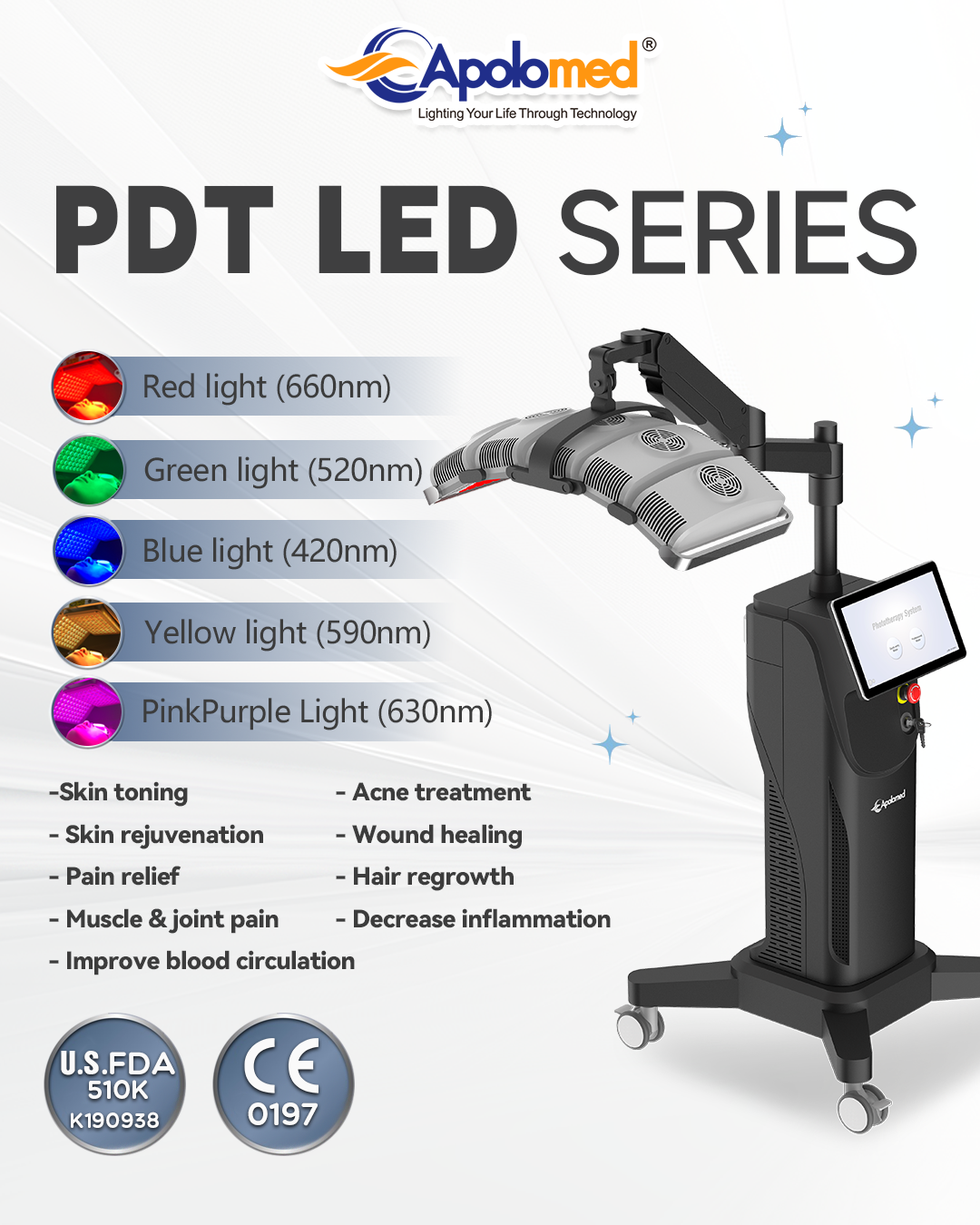
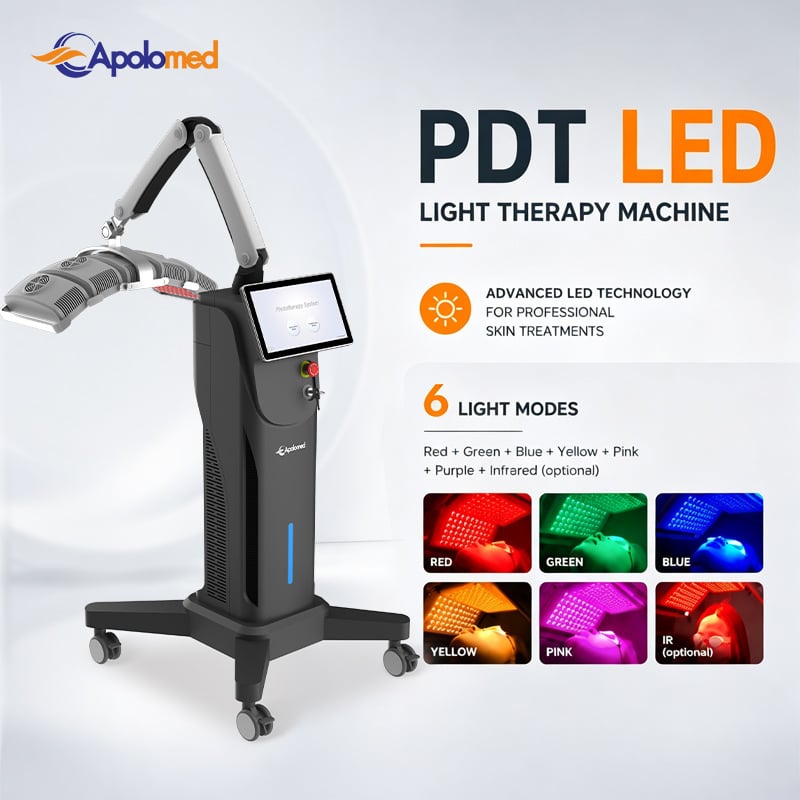
Apolomed's PDT LED equipment incorporates multiple wavelengths for professional aesthetic applications:
-
420nm Blue Light: Designed for acne-related applications.
-
660nm Red Light: Intended for skin-care and recovery applications.
-
520nm Green Light: Used in selected aesthetic applications.
-
595nm Yellow Light: A non-invasive treatment that improves lymphatic circulation and assists in body contouring.
-
630nm + 415nm Pink Light: Combines red and blue light,eliminates acne and redness.
-
660nm + 595nm Orange Light: Skin repair and improvement of skin tone.
-
660nm + 420nm Purple Light: Reducing acne lesions and associated inflammation.
-
850nm Infrared Light: Intended for selected infrared applications.
With multiple LED wavelengths, adjustable output density, and professional operating modes, Apolomed provides flexible equipment options for aesthetic clinics and beauty professionals.
For clinics considering professional LED systems, understanding wavelength specifications and intended applications is essential for selecting suitable equipment.
FAQ
1. Can blue LED light help acne-prone skin?
Blue LED light around 415nm has been studied for its interaction with naturally occurring porphyrins associated with C. acnes. This process may affect bacterial activity and support acne-related skin management.
2. What is the difference between blue and red LED light?
Blue LED light is primarily studied for its relationship with acne-associated bacterial porphyrins. Red LED light is investigated for photobiomodulation and skin recovery.
3. Does LED light therapy reduce sebum production?
Evidence suggests that light-based treatments may influence sebum levels, but results vary. LED light therapy should not be presented as a guaranteed method of controlling excessive oil production.
4. How many LED therapy sessions are needed?
Treatment frequency depends on skin condition, device specifications, and individual response. There is no universal session schedule for all LED equipment.
5. Is PDT LED treatment suitable for all skin types?
Not everyone is automatically suitable for treatment. Photosensitivity, medications, existing skin conditions, and equipment safety requirements should be evaluated beforehand.
6. How can clinics choose a professional PDT LED machine?
Clinics should compare wavelength accuracy, output density, treatment area, adjustable intensity, operating modes, and manufacturer support before purchasing professional LED equipment.
Table of Contents
- How PDT LED Light Therapy Supports Oily and Acne-Prone Skin
- Understanding Sebum Production and Acne Development
- How Blue and Red LED Light Work on Acne-Prone Skin
- How Many LED Light Therapy Sessions Are Needed?
- Post-Treatment Care and Long-Term Skin Management
- Choosing Professional PDT LED Equipment for Aesthetic Clinics
- FAQ