 EN

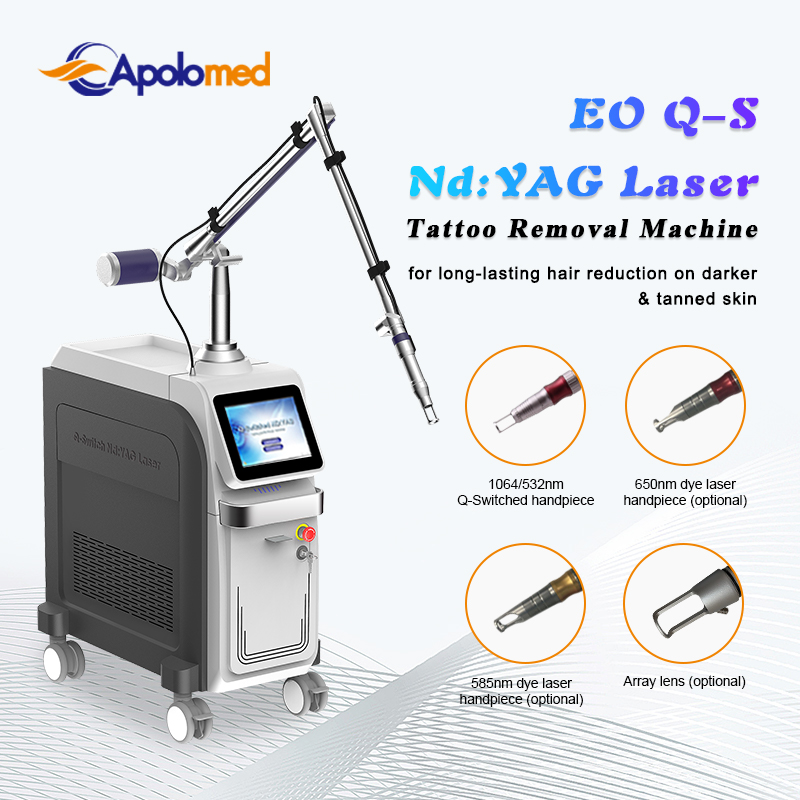
ND Laser Applications in Vascular, Pigment, and Hair Treatments
The Nd laser is widely used in aesthetic medicine and dermatology because of its versatile wavelength options and ability to target different skin structures. Its fundamental 1064 nm wavelength offers relatively deep tissue penetration and lower epidermal melanin absorption compared with shorter wavelengths, making it particularly useful for selected vascular treatments, tattoo removal, and laser hair reduction.
With different pulse durations and operating modes, Nd laser systems can address a range of aesthetic concerns. Long-pulsed systems are commonly used for vascular lesions and hair removal, while Q-switched and picosecond systems are designed for pigment and tattoo treatments.
Understanding how each wavelength and pulse mode works is essential for selecting appropriate treatment applications and achieving consistent results.
ND Laser for Vascular Lesion Treatment
How the 1064 nm ND Laser Targets Deeper Blood Vessels
The 1064 nm Nd laser penetrates several millimeters into the skin and can target deeper vascular structures. Its relatively low absorption by epidermal melanin compared with shorter wavelengths makes it a useful option for treating selected vascular lesions, including deeper telangiectasia and certain venous abnormalities.
When delivered in a long-pulsed mode, laser energy is absorbed by blood components and converted into heat. This thermal energy raises the temperature of the targeted vessel, causing coagulation and subsequent vascular remodeling.
Treatment parameters such as pulse duration, fluence, spot size, and cooling must be adjusted according to vessel diameter, depth, anatomical location, and skin phototype.
The 1064 nm wavelength is particularly useful for larger or deeper vessels. However, superficial facial redness and fine telangiectasia may respond better to other vascular technologies, including pulsed dye lasers or intense pulsed light (IPL), depending on the clinical presentation.
Clinical Applications for Telangiectasia and Rosacea-Related Vascular Changes
Long-pulsed Nd laser may be considered for selected patients with visible facial telangiectasia and deeper vascular structures associated with rosacea.
Unlike treatments designed primarily for superficial vessels, its longer wavelength allows energy to reach deeper targets. Appropriate cooling helps protect surrounding skin during treatment.
However, rosacea is a complex inflammatory skin condition, and visible redness does not always result from enlarged blood vessels alone. Nd laser may improve selected vascular features, but it does not eliminate every underlying component of rosacea.
Possible treatment reactions include temporary redness, swelling, discomfort, blistering, and pigmentation changes. Careful patient selection and professional parameter adjustment are important for reducing these risks.
ND Laser for Pigmentation Correction and Tattoo Removal
Selective Photothermolysis and Photoacoustic Pigment Fragmentation
The Nd laser can target different pigment structures depending on its wavelength and pulse duration.
The 1064 nm wavelength has relatively low absorption by epidermal melanin compared with shorter wavelengths, allowing deeper penetration into the skin. It is commonly used in Q-switched and picosecond systems for treating selected pigmented lesions and darker tattoo inks.
For tattoo removal, short laser pulses generate rapid energy delivery that can fragment pigment particles through photoacoustic and photothermal effects. The fragmented particles are subsequently processed and gradually cleared by the body's natural mechanisms.
Frequency-doubled Nd systems also provide a 532 nm wavelength. This shorter wavelength is more strongly absorbed by melanin and certain tattoo pigments, making it useful for selected superficial pigmented lesions and red or orange tattoo inks.
The appropriate wavelength depends on pigment color, depth, composition, and the patient's skin phototype. Treatment settings must be carefully selected to balance pigment clearance with the risk of epidermal injury and post-inflammatory hyperpigmentation.
Black and Multicolored Tattoo Removal
The 1064 nm Nd wavelength is particularly effective for targeting black and dark blue tattoo pigments. Its deeper penetration and relatively lower melanin absorption also make it a useful option for tattoo removal in patients with darker skin phototypes when appropriately performed.
The 532 nm wavelength is commonly used for selected warm-colored tattoo pigments, especially red and orange. However, yellow, pastel, and some mixed pigments can be difficult to remove because their absorption characteristics vary.
Professional tattoos may also require more sessions than amateur tattoos because of their greater pigment density and deeper ink distribution.
Q-switched and picosecond Nd technologies are both used for tattoo removal. Picosecond systems deliver shorter pulses and may offer advantages for certain pigment types, although their superiority over nanosecond systems is not established for every tattoo color or clinical situation.
Multiple treatment sessions are generally required, with intervals that allow the skin to recover and fragmented pigment to be cleared.
ND Laser Hair Removal Across Different Skin Types
Why 1064 nm Is Suitable for Darker Skin Phototypes
Long-pulsed 1064 nm Nd laser is widely used for hair reduction, particularly in patients with Fitzpatrick skin types IV–VI.
Hair removal works through selective photothermolysis. Laser energy is absorbed by melanin within the hair shaft and follicular structures, generating heat that damages targeted follicular components and reduces subsequent hair growth.
Compared with shorter wavelengths, 1064 nm has lower absorption by epidermal melanin. This provides an important safety advantage for darker skin phototypes because it reduces, but does not eliminate, the risk of unwanted epidermal heating.
Appropriate pulse duration, energy settings, spot size, and epidermal cooling are essential for safe treatment. The treatment response also depends on hair color, thickness, growth cycle, and anatomical location.
Dark, coarse hair generally responds better than fine, gray, white, or very light-colored hair because these hair types contain less melanin available for laser targeting.
Multiple treatment sessions are normally needed because laser hair removal is most effective when follicles are in the appropriate growth phase. The goal is long-term hair reduction rather than guaranteed permanent removal of every hair.
Additional Dermatological Applications of ND Laser Technology
Acne Treatment and Sebum Management
Certain 1064 nm Nd laser protocols have been investigated for acne management. Research suggests that specific treatment modes may influence inflammatory lesions, sebum production, and other skin responses.
However, clinical outcomes depend on the pulse duration, treatment parameters, and device configuration. These findings should not be generalized to every Nd laser system.
Laser treatment is not a universal replacement for established acne therapies. It may be considered as an additional option in selected cases following professional evaluation.
Onychomycosis and Scar-Related Applications
The 1064 nm Nd laser has also been investigated for applications such as onychomycosis and scar remodeling.
For onychomycosis, laser-generated heat may affect fungal structures within the nail. However, clinical evidence remains variable, and laser treatment should not be presented as a guaranteed method of fungal eradication.
For scar-related applications, thermal energy may influence collagen remodeling in selected treatment protocols. The effectiveness depends on scar type, device configuration, and treatment method.
These applications require further clinical evaluation and should be distinguished from the more established uses of Nd technology in vascular treatment, tattoo removal, and hair reduction.
Choosing the Right ND Laser System
Different aesthetic applications require different laser configurations. When selecting an Nd laser machine, clinics should consider its wavelength options, pulse duration, energy control, spot size, cooling system, and available operating modes.
For example, long-pulsed 1064 nm systems are commonly used for vascular treatments and hair reduction, while Q-switched or picosecond configurations are designed for pigment and tattoo applications.
A suitable system should provide stable energy delivery, adjustable treatment parameters, reliable cooling options, and clear operating protocols. Training and technical support are also important considerations for clinics incorporating laser treatments into their services.
Understanding the relationship between wavelength, pulse duration, and target tissue helps practitioners select appropriate equipment for different aesthetic applications.
Professional ND Laser Equipment for Aesthetic Clinics
Choosing the right Nd laser system is important for clinics offering professional aesthetic treatments. Different applications require specific wavelengths, pulse durations, energy settings, and operating modes to address different skin concerns.
When evaluating an Nd laser machine, practitioners should consider its treatment versatility, energy stability, adjustable parameters, cooling options, and overall operating performance.
If you are looking for professional laser equipment for aesthetic applications, explore our ND Laser Machine to learn more about its technical specifications, available configurations, and treatment applications.
FAQs
1. What is an Nd laser used for?
Nd lasers are used in aesthetic and dermatological applications, including selected vascular lesion treatments, tattoo removal, pigmentation treatments, and laser hair reduction. Additional applications, such as acne treatment and onychomycosis, are also being investigated.
2. Why is the 1064 nm wavelength important?
The 1064 nm wavelength offers relatively deep tissue penetration and lower epidermal melanin absorption than shorter wavelengths. It is commonly used for deeper vascular targets, black tattoo pigments, and hair reduction.
3. What is the difference between 1064 nm and 532 nm Nd lasers?
The 1064 nm wavelength penetrates deeper and is commonly used for black or dark blue tattoo pigments and selected vascular or hair treatments. The 532 nm wavelength is more strongly absorbed by melanin and is used for selected superficial pigmentation and red or orange tattoo pigments.
4. Is Nd laser suitable for darker skin types?
The long-pulsed 1064 nm Nd laser is commonly preferred for hair reduction in darker skin phototypes because of its relatively lower epidermal melanin absorption. However, burns and pigmentation changes remain possible, so professional assessment and appropriate treatment settings are essential.
5. How many sessions are needed for Nd laser treatments?
The number of sessions depends on the treatment indication, target tissue, device configuration, and individual response. Hair reduction and tattoo removal usually require multiple sessions, while vascular treatment plans vary according to vessel size and depth.
6. What are the possible side effects of Nd laser treatment?
Possible side effects include temporary redness, swelling, discomfort, blistering, burns, and pigmentation changes. The risks vary according to wavelength, pulse duration, energy settings, skin phototype, and treatment area.
Table of Contents
- ND Laser Applications in Vascular, Pigment, and Hair Treatments
- ND Laser for Vascular Lesion Treatment
- ND Laser for Pigmentation Correction and Tattoo Removal
- ND Laser Hair Removal Across Different Skin Types
- Additional Dermatological Applications of ND Laser Technology
- Choosing the Right ND Laser System
- Professional ND Laser Equipment for Aesthetic Clinics
-
FAQs
- 1. What is an Nd laser used for?
- 2. Why is the 1064 nm wavelength important?
- 3. What is the difference between 1064 nm and 532 nm Nd lasers?
- 4. Is Nd laser suitable for darker skin types?
- 5. How many sessions are needed for Nd laser treatments?
- 6. What are the possible side effects of Nd laser treatment?