 EN
EN

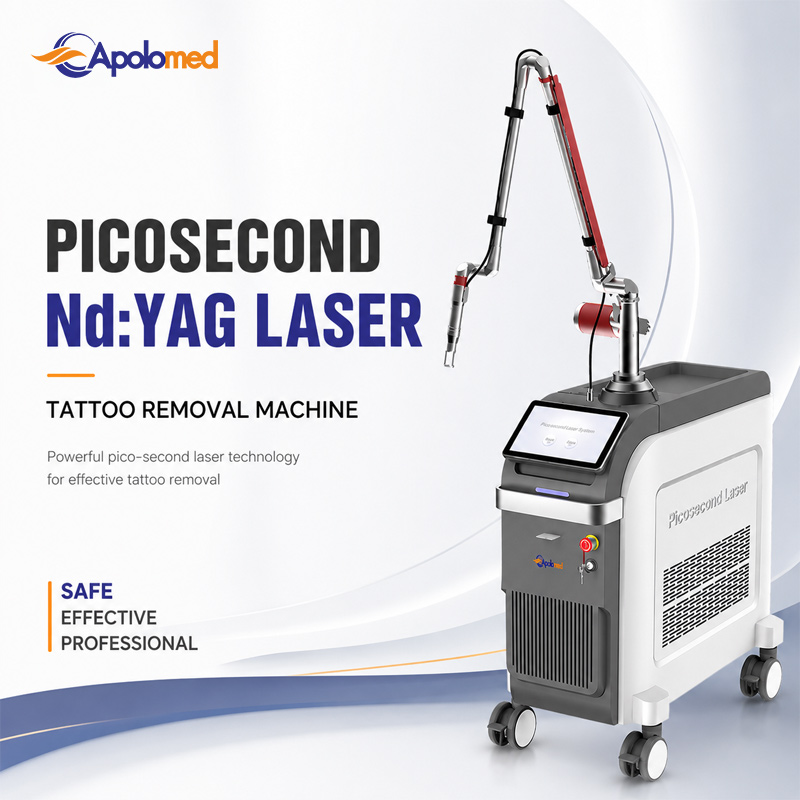
How Pico Laser Targets Stubborn Facial Chloasma
Photoacoustic fragmentation of melanin: Why pico laser lowers PIH risk in chloasma
Pico laser treats chloasma (melasma) through a fundamentally different mechanism than traditional thermal lasers. Its pulses—measured in trillionths of a second—deliver energy so rapidly that the primary effect is photomechanical: a shockwave that shatters melanin granules into ultra-fine particles, rather than relying on photothermal heating. This photoacoustic fragmentation limits temperature rise in surrounding tissue—a critical advantage for chloasma-prone skin, which flares with even minor inflammation. Because post-inflammatory hyperpigmentation (PIH) is triggered by melanocyte activation following thermal injury, the minimal heat generation of pico laser dramatically reduces this risk. The fragmented pigment is then cleared naturally via the lymphatic system. This approach is especially beneficial for facial skin—thin and sensitive—and for darker skin types (Fitzpatrick III–V), which are inherently more susceptible to PIH. By avoiding prolonged heating that stimulates melanocytes, pico laser offers a safer, more targeted path to fading stubborn chloasma without the rebound pigmentation commonly seen with older laser modalities.
Clinical evidence: Clearance rates and treatment response in Fitzpatrick III–V skin with resistant chloasma
Research supports pico laser as an effective, well-tolerated option for treatment-resistant facial chloasma—even in darker skin tones. A 2023 review in Frontiers in Medicine found that non-fractional picosecond alexandrite laser (755 nm) achieved faster and superior clearance compared to Q-switched Nd:YAG, while fractional picosecond devices showed efficacy comparable to the gold-standard triple combination cream containing hydroquinone. In Asian patients with Fitzpatrick III–IV skin, fractionated non-ablative picosecond laser yielded over 70% patient satisfaction, with no reported cases of hypo- or hyperpigmentation (Wong et al., 2021). These outcomes reflect pico laser’s ability to address dermal and mixed-type pigment—components often unresponsive to topicals alone. The low-energy, multi-pass “toning” technique calms overactive melanocytes without overheating the dermis, further lowering PIH risk. Collectively, clinical evidence confirms pico laser’s safety and efficacy in darker skin types where other lasers are contraindicated—and underscores that optimal results require integration with strict sun protection and pigment-suppressing topicals.
Why Chloasma Resists Treatment — Beyond Surface Pigment
Melasma subtypes (epidermal, dermal, mixed) and their differential response to pico laser
The location of pigment within the skin is the primary determinant of how melasma responds to pico laser. Epidermal melasma—where melanin resides in the upper epidermis—typically clears faster, as the photoacoustic effect efficiently fragments superficial pigment. Dermal melasma, however, features melanophages and free pigment lodged deep in the dermis, often accompanied by perivascular inflammation and vascular proliferation. This deeper component is inherently more resistant: even with the 1064 nm wavelength and ultra-short pulses that minimize thermal diffusion, clearance is slower and recurrence common if only surface pigment is addressed. Mixed melasma combines both patterns—leading to rapid initial fading that may mask residual dermal pigment, later reactivating. Misclassifying the subtype—or relying solely on visual inspection without Wood’s lamp or dermatoscopic assessment—frequently results in undertreatment. As emphasized in a 2023 StatPearls review, dermal changes such as basement membrane disruption, solar elastosis, and neovascularization are integral to melasma persistence—reinforcing why pico laser must be part of a broader strategy targeting both pigment and its underlying microenvironment.
Key resistance drivers: Hormonal fluctuations, chronic UV exposure, and diagnostic pitfalls
Beyond pigment depth, melasma’s chronicity is driven by hormonal fluctuations—estrogen and progesterone upregulate melanogenesis and stimulate vascular endothelial growth factor, perpetuating a cycle of pigment production and inflammation. Chronic UV exposure, including visible blue light, continues to activate melanocytes even after laser treatment, making rigorous photoprotection non-negotiable. A critical diagnostic pitfall is mistaking post-inflammatory hyperpigmentation or actinic lichen planus for melasma—leading to inappropriate laser settings and potential rebound hyperpigmentation. Ignoring the vascular component is another common error: melasma skin often exhibits increased vascularity and mast cell density, and aggressive fluences can ignite subclinical inflammation, triggering pigment darkening. Treatment resistance, therefore, is rarely a failure of pico laser alone—but a reflection of these unaddressed underlying drivers.
Optimizing Pico Laser Protocols for Facial Chloasma
Critical parameter selection: Wavelength (532nm vs. 1064nm), fluence, and pulse duration for mixed-depth pigment
For mixed-depth chloasma, wavelength selection is foundational to safe, effective treatment. The 532 nm KTP wavelength is highly absorbed by superficial melanin and ideal for epidermal pigment—but its limited penetration risks missing deeper dermal deposits. In contrast, the 1064 nm Nd:YAG wavelength penetrates deeper, targeting dermal and mixed pigment while sparing the epidermis—significantly reducing PIH risk in Fitzpatrick III–V skin. When both components coexist, sequential treatment—starting with 1064 nm to calm deeper melanocytes—often yields superior clearance over monotherapy. Fluence should remain low (1.0–2.5 J/cm² for 1064 nm toning), delivered via multiple gentle passes until mild erythema appears. Pulse duration in the picosecond range (300–900 ps) ensures a dominant photomechanical effect—shattering pigment with minimal heat, preserving the dermal-epidermal junction, and lowering rebound risk.
Sustaining Results: Combining Pico Laser With Holistic Recurrence Prevention
Topical synergies (tranexamic acid, cysteamine) and medical-grade sun protection as essential co-interventions
Topical agents like tranexamic acid and cysteamine work synergistically with pico laser to target melasma’s dermal and vascular underpinnings. Tranexamic acid inhibits plasmin-mediated melanocyte stimulation and inflammation; cysteamine blocks tyrosinase activity, directly suppressing melanin synthesis. Applied post-laser, these agents benefit from enhanced penetration through transient micro-channels created by the photoacoustic effect. Medical-grade sun protection—SPF 50+, high UVA-PF, and iron oxide–tinted physical filters—is non-negotiable: UV and visible light retrigger melanogenesis, eroding treatment gains. An integrated protocol—pico laser sessions every 4–6 weeks, nightly topical application, and daily photoprotection—stabilizes melanocyte activity, repairs the skin barrier, and significantly lowers recurrence. This transforms pico laser from a standalone intervention into a sustainable, long-term maintenance strategy.
FAQ Section
What is chloasma and how does pico laser treat it?
Chloasma, also known as melasma, is a skin condition characterized by dark pigmentation. Pico laser treats chloasma by using photoacoustic fragmentation to shatter melanin granules into ultra-fine particles without generating excessive heat, reducing inflammation and post-inflammatory hyperpigmentation (PIH).
Why is pico laser safer for darker skin types?
Pico laser minimizes thermal injury to surrounding tissues, which is crucial for darker skin types (Fitzpatrick III–V) that are prone to PIH. Its photomechanical effect targets pigment effectively while preserving the skin’s integrity.
Can pico laser address resistant melasma?
Yes, pico laser is effective against resistant dermal and mixed-type melasma due to its ability to target deeper skin pigmentation through ultra-short pulses and photoacoustic effects. Combining pico laser with topical treatments and sun protection enhances its efficacy.
What are the typical wavelengths used in pico laser treatments?
Pico lasers commonly use 532 nm and 1064 nm wavelengths. The 532 nm wavelength targets superficial pigment, while the 1064 nm wavelength penetrates deeper, making it ideal for mixed and dermal melasma.
How can recurrence of melasma be prevented after pico laser treatment?
Effective prevention includes strict photoprotection with medical-grade sunscreens and daily application of topical agents like tranexamic acid and cysteamine to suppress melanogenesis and inflammation. Regular maintenance treatments with pico laser also help sustain results.