 EN

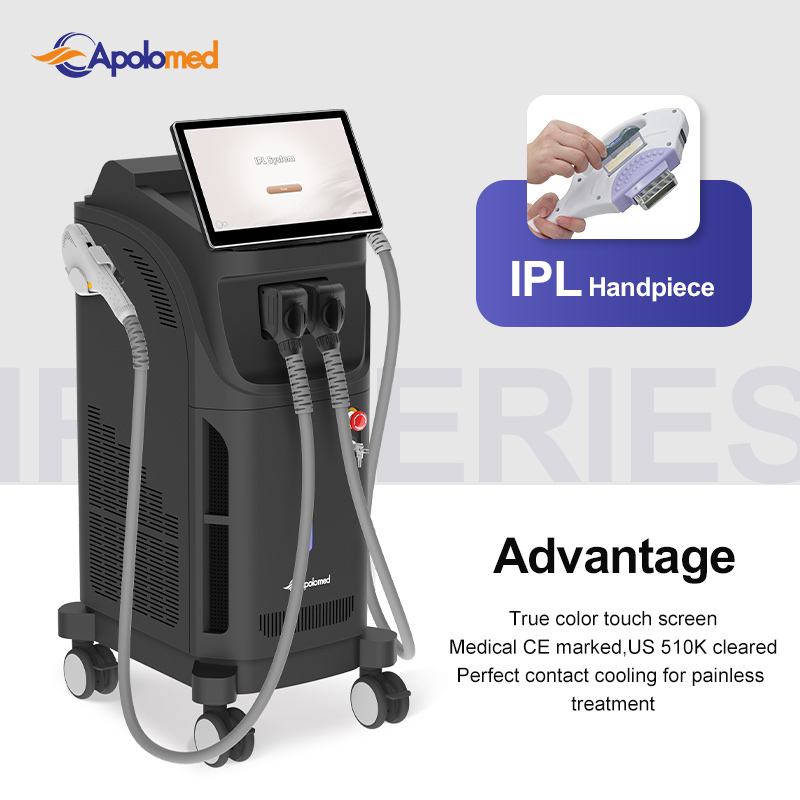
Understanding IPL Safety Risks for Sensitive Facial Skin
Why Sensitive Skin Reacts Strongly to IPL Energy: Barrier Function and Neurovascular Hyperreactivity
Intense Pulsed Light (IPL) therapy delivers broadband light energy targeting melanin and hemoglobin—but sensitive facial skin reacts disproportionately due to two interrelated physiological traits: a compromised epidermal barrier and neurovascular hyperreactivity. In sensitive skin, the stratum corneum is often thinner and less cohesive, allowing IPL energy to penetrate more deeply than intended. This reduced barrier function increases thermal injury risk as excess light is absorbed by chromophores and converted to heat. Concurrently, heightened nerve and vascular reactivity triggers rapid vasodilation and release of inflammatory mediators like substance P—amplifying erythema, stinging, and edema even at conservative settings. Patients with impaired barrier integrity (e.g., from atopic dermatitis or over-exfoliation) consistently demonstrate lower pain thresholds and prolonged recovery after IPL. Unlike resilient skin—which efficiently dissipates heat and repairs minor damage—sensitive skin’s muted repair capacity and elevated sensory sensitivity make it inherently less tolerant of intense light therapies. Therefore, assessing barrier integrity and vascular reactivity before treatment is not optional—it’s foundational to safety.
Common & Severe Side Effects: From Transient Redness to Hypopigmentation and Blistering
Transient erythema, mild edema, and warmth are typical—and expected—immediate responses to IPL on sensitive skin, usually resolving within hours to days. However, when parameters exceed tolerance or baseline reactivity is high, complications escalate rapidly. Blistering and crusting signal overt epidermal thermal injury, often worsened by inadequate cooling or unrecognized recent sun exposure. Post-inflammatory hyperpigmentation (PIH) or hypopigmentation arises unpredictably, particularly in Fitzpatrick skin types III–IV, where competing melanin pools absorb IPL energy unevenly. Rare but serious outcomes—including purpura, hypertrophic scarring, or secondary infection—typically follow lapses in aftercare or concomitant use of photosensitizing agents (e.g., topical retinoids or certain oral medications), which lower the skin’s damage threshold. Distinguishing normal post-treatment redness from early signs of a burn is critical: persistent burning, sharp pain, or tense, dusky edema warrants prompt clinical evaluation. Strict sun avoidance and targeted barrier repair are non-negotiable components of post-IPL management for sensitive facial skin.
Skin Type, Tone, and IPL Eligibility: Evidence-Based Safety Guidelines
Fitzpatrick Scale Realities: Higher Complication Rates in Types I–III (Light/Sensitive) and IV–VI (Melanin-Rich)
The Fitzpatrick skin phototype classification remains the gold standard for pretreatment IPL risk stratification. Both ends of the spectrum present distinct but clinically significant hazards. Light, sensitive skin (Types I–III) carries elevated risks of burns, persistent erythema, and PIH—not primarily due to melanin load, but because of inherent barrier fragility and neurovascular hyperreactivity. Conversely, melanin-rich skin (Types IV–VI) absorbs IPL energy more broadly and intensely, raising the likelihood of blistering, hypopigmentation, or paradoxical hyperpigmentation. A 2022 review in Dermatologic Surgery found adverse event rates exceeding 10% in darker skin types when generic device settings were applied—underscoring that IPL is not universally scalable. The table below summarizes evidence-based risk profiles:
| Fitzpatrick Skin Type | Typical Features | IPL Risk Profile |
|---|---|---|
| I | Pale white skin; always burns, never tans | High risk of burns, erythema, and PIH due to sensitive barrier |
| II | Fair skin; burns easily, tans with difficulty | Similar to Type I; increased irritation and pigmentary instability |
| III | Darker white; sometimes mild burn, gradually tans | Moderate risk; may experience transient redness and inconsistent clearance |
| IV | Light brown; burns slightly, tans easily | Elevated dyspigmentation risk—especially PIH—from melanin competition |
| V | Brown; rarely burns, tans easily | Significant risk of blistering, hypopigmentation, and paradoxical darkening |
| VI | Dark brown or black; never burns | IPL is generally contraindicated; high risk of severe burns, scarring, and permanent pigment loss |
For Types V and VI, alternative modalities (e.g., low-fluence Q-switched lasers) are strongly preferred. For Types I–IV, eligibility hinges on conservative parameter selection, mandatory patch testing, and individualized assessment—not skin type alone.
Key Contraindications and Patient Screening for Facial IPL
Absolute Red Flags: Active Rosacea, Recent Sun Exposure, and Topical Retinoid Use
Three absolute contraindications must be ruled out before any facial IPL session: active rosacea, recent sun exposure, and current topical retinoid use. Active rosacea reflects chronic neurovascular dysregulation—making IPL energy highly likely to trigger a paradoxical flare, worsening erythema, papules, and telangiectasia. Sun exposure within the past 14 days—even subclinical tanning—upregulates melanin and destabilizes epidermal homeostasis, increasing the risk of PIH, blistering, and uneven treatment response. Topical retinoids (including tretinoin and high-strength retinol) thin the stratum corneum and impair photoprotection; a minimum 7-day discontinuation period is required, with many experts recommending two weeks for sensitive facial skin. Photosensitizing medications (e.g., doxycycline, isotretinoin, or certain NSAIDs) compound these risks, but the triad of rosacea, sun exposure, and retinoids accounts for the majority of preventable IPL complications. Meticulous screening—including visual assessment, patient interview, and documented history—is essential. When in doubt, defer treatment and prioritize barrier stabilization.
Optimizing IPL Safety: Pre-Treatment Prep and Post-Care for Delicate Skin
Careful preparation and structured aftercare are evidence-based pillars of safe IPL delivery on sensitive facial skin. These protocols prioritize barrier preservation, thermal mitigation, and inflammation control—without compromising clinical efficacy.
Customized IPL Protocols: Patch Testing, Cooling, and Conservative Parameter Settings
- Patch Testing: Conduct a test spot on a discreet area (e.g., behind the ear or preauricular fold) 24–48 hours prior to full treatment. Observe for excessive erythema, edema, or delayed hypersensitivity—this informs final fluence selection and confirms tolerability.
- Integrated Cooling: Employ contact cooling (e.g., sapphire tip) or dynamic cryogen spray during each pulse. Consistent epidermal cooling reduces pain, limits thermal diffusion, and significantly lowers blistering risk—even in highly reactive patients.
- Conservative Settings: Begin with the lowest effective fluence and longest pulse duration compatible with target chromophore absorption. Incremental adjustments should only follow absence of adverse reaction—not pursuit of faster results. This minimizes PIH, rebound erythema, and neurogenic flares.
Gentle Post-IPL Skincare: Barrier Repair, Strict UV Protection, and Soothing Actives
- Barrier Repair: For the first 48 hours, cleanse with a pH-balanced, fragrance-free cleanser and apply a ceramide-, cholesterol-, and fatty acid–rich moisturizer twice daily. Avoid physical scrubs, enzymatic exfoliants, or toners containing alcohol or acids.
- Strict UV Protection: Wear broad-spectrum SPF 30+ every day—even indoors—as UVA penetrates glass and triggers melanocyte activity. Reapply every 2 hours during outdoor exposure. UV insult in the first 7 days post-IPL is the leading modifiable cause of persistent pigmentation.
- Soothing Actives: Centella asiatica, colloidal oatmeal, and stabilized aloe vera provide anti-inflammatory and calming benefits without compromising barrier recovery. Avoid retinoids, AHAs/BHAs, and vitamin C for at least 5–7 days—or until erythema fully resolves.
- Activity Modification: Refrain from hot showers, saunas, steam rooms, and vigorous exercise for 24–48 hours to limit vasodilation and prevent prolonged redness or edema.
FAQ
What is IPL treatment and how does it work?
IPL (Intense Pulsed Light) therapy uses broadband light energy to target chromophores like melanin and hemoglobin, enhancing skin tone and texture. It’s commonly used for concerns like pigmentation, spider veins, and acne scars.
Why is sensitive skin at higher risk during IPL treatments?
Sensitive skin features a thinner epidermal barrier and heightened neurovascular reactivity, which can lead to excessive penetration of light energy, thermal injury, and amplified inflammatory responses.
What are the most common side effects of IPL on sensitive skin?
Common side effects include transient redness, mild edema, and warmth. Severe side effects like blistering, hypopigmentation, or scarring can occur from improper settings or inadequate skin preparation.
How does skin type affect IPL treatment risks?
According to the Fitzpatrick scale, each skin type has distinct challenges. Light skin types (I–III) risk burns and persistent erythema, whereas melanin-rich types (IV–VI) may experience blistering and pigmentation issues.
What precautions should be taken before and after IPL treatment?
Pre-treatment precautions include patch testing, avoiding sun exposure, and discontinuing topical retinoids. Post-treatment requires barrier repair, strict UV protection, and gentle skincare to optimize recovery.