 EN

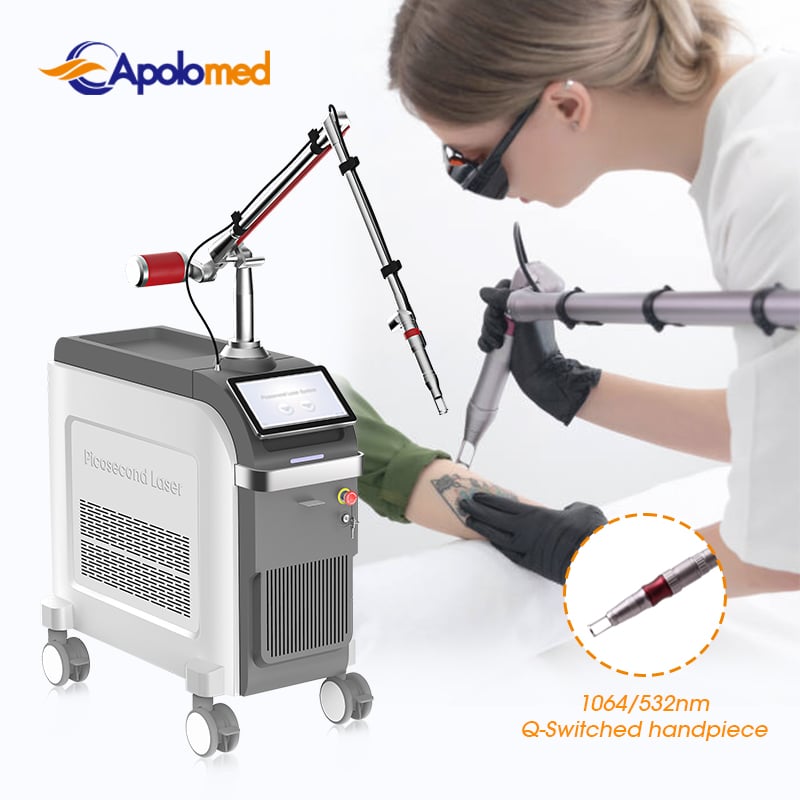
How Picosecond Laser Works: Photomechanical Fragmentation vs. Q-Switched Photothermal Action
Ultra-Short Pulses (ps) Trigger Acoustic Shockwaves That Shatter Melanin Without Heat Buildup
Picosecond lasers deliver pulses measured in trillionths of a second (typically 300–900 ps), a duration so brief that the primary mechanism shifts from heat to a photoacoustic effect. The ultra-short pulse creates a rapid pressure wave that mechanically fragments melanin into exceptionally fine particles—far smaller than those produced by nanosecond devices. This photomechanical action bypasses the thermal conduction phase that would otherwise cook surrounding tissue. As confirmed in a 2023 review published in Frontiers in Medicine, picosecond lasers produce a predominantly photomechanical rather than photothermal effect, enabling efficient pigment disruption while minimizing collateral thermal damage. These micro-fragments are then cleared by the body’s immune and lymphatic systems over time. Because heat buildup is negligible, the epidermis remains largely intact, reducing risks of burns and post-inflammatory hyperpigmentation (PIH). This precision makes picosecond technology especially suited for recalcitrant dermal pigmentation—including melasma and nevus of Ota—and delicate areas where thermal injury is a concern. Clinically, this translates to faster recovery, fewer sessions, and improved safety across diverse skin tones.
Q-Switched Lasers (ns) Rely on Thermal Expansion—Increasing Risk of Epidermal Damage and PIH
Q-switched lasers operate on nanosecond pulses (billionths of a second), which are significantly longer than picosecond pulses. This extended duration allows heat to accumulate within the target chromophore, causing thermal expansion and eventual fragmentation of melanin through combined thermal and mechanical forces. However, the heat often diffuses into the surrounding epidermis and dermis, potentially damaging the basal layer and triggering a pigmentary response. A 2023 comparative analysis highlights that this photothermal reliance correlates with a higher incidence of PIH—particularly in patients with Fitzpatrick skin types IV–VI—where reported rates range from 25% to as high as 47% when treating lentigines. While Q-switched lasers remain effective for many superficial lesions like solar lentigines, their thermal profile demands rigorous cooling, limits safe energy delivery, and may necessitate more sessions than picosecond alternatives. Understanding this fundamental difference helps clinicians prioritize safety when selecting laser modalities for pigmented lesions.
Clinical Efficacy: Picosecond Laser Delivers Faster, Deeper Clearance of Stubborn Pigmentation
Higher Clearance Rates for Melasma and Solar Lentigines in Multi-Study Analyses
A systematic review and meta-analysis of picosecond laser therapy for melasma (Feng et al., 2023) consistently reported superior clearance rates compared to traditional nanosecond systems. The ultra-short pulses generate strong acoustic shockwaves that shatter melanin into sub-micron particles—enabling deeper, more uniform fragmentation without the thermal injury that can paradoxically darken lesions. A prospective split-face study in Asian patients (Ungaksornpairote et al., 2020) further confirmed significantly greater improvement in both epidermal and dermal pigmented spots following picosecond treatment versus Q-switched Nd:YAG. For solar lentigines, the precision of picosecond targeting spares adjacent keratinocytes and melanocytes, lowering the risk of rebound hyperpigmentation and textural changes. Collectively, these findings underscore that the photomechanical action of picosecond lasers achieves faster, more complete, and more durable clearance—especially for lesions historically resistant to thermal-based approaches.
Fewer Treatment Sessions Needed—Especially for Recalcitrant Epidermal and Dermal Spots
The enhanced fragmentation efficiency of picosecond technology directly reduces treatment burden. Where Q-switched lasers often require six to ten sessions for deep dermal melasma or persistent solar lentigines, picosecond protocols frequently achieve comparable or superior clearance in just three to five treatments. Smaller pigment particles are cleared more rapidly by macrophages and the lymphatic system, accelerating visible fading of brown spots and mottled pigmentation. This shorter course is especially beneficial for patients with long-standing, treatment-resistant lesions—many of whom have previously failed multiple rounds of topical, chemical, or thermal laser therapies. Clinicians report improved adherence and satisfaction, alongside lower cumulative thermal exposure, which further mitigates the risk of PIH and other inflammatory sequelae.
Safety & Suitability: Why Picosecond Laser Is Preferred for Pigment-Prone and Darker Skin Types
Reduced Post-Inflammatory Hyperpigmentation (PIH) Incidence in Fitzpatrick IV–VI Patients
The most compelling safety advantage of picosecond lasers for darker skin lies in its dramatically lower PIH incidence. Traditional Q-switched lasers rely on photothermal destruction—a process inherently prone to thermal spillover in melanin-rich skin. In Fitzpatrick IV–VI patients, this leads to clinically significant PIH in up to 47% of cases when treating lentigines. In contrast, the picosecond laser’s photoacoustic mechanism fragments pigment via stress waves—not heat—preserving the integrity of the dermal-epidermal junction and avoiding the inflammatory cascade that triggers hyperpigmentation. A clinical study focused exclusively on darker skin types demonstrated a PIH rate of just 4.65% with picosecond treatment, reinforcing its role as the preferred modality for pigment-prone and ethnically diverse populations.
Shorter Downtime and Improved Tolerability Without Compromising Efficacy
Lower thermal injury translates directly to improved patient experience: minimal downtime, reduced discomfort, and faster return to daily life. Unlike Q-switched treatments—which commonly cause erythema, edema, crusting, and several days of social withdrawal—the picosecond laser typically induces only transient, mild redness that resolves within hours. The stratum corneum remains largely undisturbed, preserving barrier function and preventing secondary pigmentary triggers. This tolerability is not achieved at the expense of efficacy; robust pigment clearance is maintained across lesion types and depths. For individuals managing chronic pigmentary disorders—such as melasma or post-acne hyperpigmentation—the ability to treat aggressively yet safely represents a meaningful advance in long-term skin tone management.
Practical Considerations: Cost, Accessibility, and When Q-Switched Laser May Still Be Appropriate
Picosecond laser systems carry a significant upfront cost—device prices are two to three times higher than traditional Q-switched units—leading to per-session fees that typically range from $400 to $900, compared to $150–$400 for Q-switched treatments (American Society for Dermatologic Surgery, 2023). This financial barrier is compounded by limited accessibility: picosecond platforms remain concentrated in specialized dermatology centers and metropolitan practices, whereas Q-switched lasers are widely available in community clinics and smaller aesthetic offices. Nevertheless, Q-switched technology retains clinical value in specific scenarios. For patients with lighter skin tones (Fitzpatrick I–III) and well-defined, superficial epidermal lesions—such as isolated solar lentigines—the thermal-based mechanism delivers predictable, cost-effective clearance with low PIH risk. Similarly, when treating small, non-recalcitrant spots unlikely to respond poorly to conventional therapy, the proven efficacy and broader availability of Q-switched lasers may make them the pragmatic first-line choice. In these cases, clinical judgment—not technology alone—guides optimal, individualized care.
FAQ
What is the main difference between picosecond and Q-switched lasers?
Picosecond lasers use ultra-short pulses measured in trillionths of a second to produce a photoacoustic effect, resulting in mechanical fragmentation of melanin. Q-switched lasers rely on nanosecond pulses, which cause heat buildup and thermal expansion, often leading to higher risks of epidermal damage and post-inflammatory hyperpigmentation (PIH).
Why are picosecond lasers safer for darker skin types?
Picosecond lasers rely on stress waves rather than heat, minimizing thermal injury and reducing PIH incidence—especially for patients with Fitzpatrick IV–VI skin types. Traditional Q-switched lasers, in contrast, can cause significant PIH through their photothermal mechanism.
How many sessions are typically required for picosecond laser treatments?
Picosecond lasers often achieve excellent clearance in 3 to 5 sessions, compared to 6 to 10 sessions required by Q-switched lasers, particularly for recalcitrant dermal conditions.
Are picosecond lasers more expensive than Q-switched lasers?
Yes, picosecond laser systems are more expensive upfront, leading to higher per-session fees ranging from $400 to $900. Q-switched treatments are more affordable, typically costing $150–$400 per session.
When might Q-switched lasers still be appropriate?
Q-switched lasers are still effective for lighter skin tones (Fitzpatrick I–III) and superficial epidermal lesions like solar lentigines. They are more affordable and accessible, making them a pragmatic choice for simpler cases.
Table of Contents
- How Picosecond Laser Works: Photomechanical Fragmentation vs. Q-Switched Photothermal Action
- Clinical Efficacy: Picosecond Laser Delivers Faster, Deeper Clearance of Stubborn Pigmentation
- Safety & Suitability: Why Picosecond Laser Is Preferred for Pigment-Prone and Darker Skin Types
- Practical Considerations: Cost, Accessibility, and When Q-Switched Laser May Still Be Appropriate
-
FAQ
- What is the main difference between picosecond and Q-switched lasers?
- Why are picosecond lasers safer for darker skin types?
- How many sessions are typically required for picosecond laser treatments?
- Are picosecond lasers more expensive than Q-switched lasers?
- When might Q-switched lasers still be appropriate?