 EN
EN

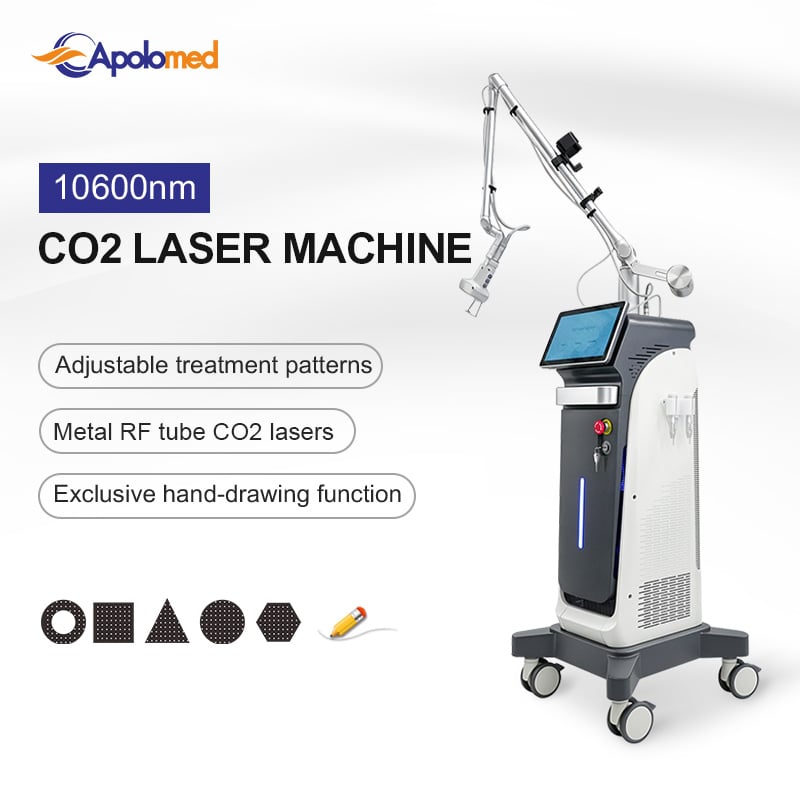
What Power Fractional CO2 Laser Do Clinics Need?
Blog Abstract: Choosing the right power output for a clinical fractional CO2 laser is a critical capital equipment decision for aesthetic practice owners. Operating an underpowered system leads to extended treatment times and multiple passes, while overpaying for unnecessary wattage can strain operational budgets. This guide breaks down the clinical physics of power (measured in watts) in 10,600 nm systems, compares 30 W vs. 50+ W outputs, and examines why the 40 W to 55 W range serves as the ideal sweet spot for comprehensive scar revision and dermal resurfacing.
1. What Power Output Means in Fractional CO2 Resurfacing
In a 10,600 nm fractional CO2 laser system, power (watts) represents the rate at which optical energy is delivered to target tissue per unit of time. Because water in skin tissue readily absorbs the 10,600 nm wavelength, rapid energy delivery vaporizes water within microscopic columns, creating targeted Microthermal Zones (MTZs).
The Relationship Between Wattage and Tissue Interaction
-
Dermal Depth vs. Surface Trauma: Higher peak power enables shorter pulse durations while maintaining effective pulse energies. Clinical trials comparing 30 W and 40 W systems show that higher wattage creates ablation columns that penetrate deeper into the dermis with narrower surface diameters.
-
Reduced Peripheral Thermal Damage: Faster energy delivery limits thermal diffusion to adjacent uninjured tissue. This minimizes carbonization around the MTZ, which directly accelerates re-epithelialization and reduces post-procedure erythema.
-
Treatment Efficiency: Higher power allows clinicians to achieve deep dermal remodeling in fewer passes, shortening overall chair time while increasing consistency.
2. Comparing Power Tiers: 30 W vs. 40 W to 55 W Systems
Selecting the correct wattage depends primarily on the clinical case mix of your practice—ranging from superficial anti-aging maintenance to deep structural scar correction.
Clinical Comparison Matrix
| Clinical Parameter | 35 W Systems | 55 W Systems |
| Primary Indications | Fine lines, superficial texture, mild photodamage, light maintenance. | Deep atrophic acne scars (boxcar/icepick), severe rhytides, surgical/trauma scars. |
| Ablation Profile | Wider surface ablation relative to depth; higher risk of thermal accumulation on multiple passes. | Deeper dermal penetration with narrower surface MTZs; reduced peripheral thermal diffusion. |
| Operational Efficiency | May require 3–5 passes for deep dermal remodeling, increasing chair time. | Achieves target dermal depth in fewer passes; higher energy density per microbeam (e.g., up to 300 mJ). |
| Recovery Window | Standard 5–7 day peeling; higher potential for persistent post-treatment erythema if stacked. | Faster re-epithelialization due to cleaner, non-carbonized ablation margins. |
3. Key Technological Features of Medical-Grade CO2 Platforms
When evaluating 40 W to 55 W platforms—such as modern RF-driven systems—clinicians should look for specific parameters that maximize therapeutic control:
-
RF Sealed-Off CO2 Tubes: Compared to glass-tube designs, radiofrequency (RF) tubes generate stable energy output with ultra-short pulse durations (down to 0.1 ms), significantly enhancing pulse-to-pulse uniformity.
-
Versatile Scanning Geometries: Support for square, circular, hexagonal, triangular, and customizable freehand patterns ensures localized delivery to irregular scar tracts without exposing adjacent healthy tissue.
-
Dynamic Density Control: Adjustable dot density (ranging from 25 to over 3,000 PPA/cm²) allows operators to tailor treatments for Fitzpatrick skin types III–V by lowering coverage density while maintaining effective dermal depth.
-
Flexible Pulse Modes: Multi-mode delivery—including Continuous Wave, Single Pulse, Super Pulse, and Ultra Pulse—enables seamless transitions from full ablative surgical cutting to fractional aesthetic resurfacing.
4. Operational Considerations for Practice Growth
Investing in a 40 W to 55 W fractional CO2 platform provides long-term operational advantages that go beyond immediate treatment capabilities:
-
Broader Indication Spectrum: High-power platforms accommodate severe dermatological concerns, preventing the need to turn away high-acuity patients or refer out complex scar cases.
-
Multi-Application Versatility: Modern systems often integrate additional handpieces for surgical cutting, pigmented lesion treatment, and specialized tissue tightening, increasing return on investment (ROI) from a single system.
-
Standardized Safety Controls: Features such as digital tracking, user-friendly interface presets, and medical certifications (FDA 510(k), CE clearance) ensure strict adherence to clinical standards across all operating staff.
5. Conclusion
For aesthetic practices focused on delivering consistent clinical outcomes across a wide spectrum of skin conditions, a 40 W to 55 W fractional CO2 laser provides the optimal balance of power, depth, and patient safety. While 30 W systems are sufficient for superficial textural maintenance, higher-wattage platforms allow clinicians to treat deep atrophic scars and severe rhytides with greater precision, shorter treatment times, and minimized recovery windows.