 EN
EN

1. The Mechanism Behind Immediate and Lasting Skin Tightening
Unlike topical or surface-level treatments, endolaser technology works directly within the dermis and subcutaneous tissue layers. An ultra-thin optical fiber (typically ranging from 200 to 600 microns) is inserted beneath the skin to deliver precise laser energy where structural laxity begins.
The Dual-Action Thermal Process:
-
Immediate Collagen Contraction: As the laser fiber is moved under the skin in a systematic pattern, the converted thermal energy raises the temperature of the target tissue to approximately sixty to seventy degrees Celsius. At this controlled temperature, existing collagen fibers immediately denature and contract, providing a visible lifting effect right after the session.
-
Long-Term Neocollagenesis: The micro-thermal stimulation prompts fibroblasts to synthesize fresh Type I and Type III collagen over the following weeks. Concurrently, old and disorganized collagen bands are systematically broken down through matrix metalloproteinase activity, gradually rebuilding the skin’s internal support architecture.
-
Targeted Lipolysis: Specific wavelengths disrupt adipocyte integrity, allowing the system to gently reduce small, localized pockets of fat (such as submental fullness under the chin) that contribute to a heavy or sagging profile.
2. Real Cases: What Endolaser Platforms Achieve
A successful clinical outcome relies heavily on selecting the correct fiber size and energy parameters tailored to the target anatomical zone.
Treatment Strategies by Application Area
| Target Zone | Structural Objective | Operational Protocol |
| Facial & Jawline Contouring | Sharpening the jawline, softening nasolabial folds, and reducing submental fat. | Utilization of delicate 200 to 300 micron fibers under local tumescent anesthesia; energy delivered in a crisscross or fan-shaped retrograde pattern. |
| Body Skin Tightening | Firming loose skin on broader areas such as the abdomen after weight loss. | Utilization of larger 600 to 1000 micron fibers configured to higher power settings, typically delivered over multiple sessions spaced weeks apart. |
Clinical data consistently highlights high patient satisfaction rates. Because the system remodels the tissue from within rather than pulling the skin from the outside, the final aesthetic outcome preserves the patient’s natural contours and facial expressions.
3. What Recovery Looks Like and Patient Protocols
One of the primary reasons patients prefer endolaser treatments over traditional surgical alternatives is the significantly condensed recovery window.
Post-Procedure Milestones:
-
First 48 Hours: Patients may experience mild swelling, localized warmth, and tenderness in the treated zone. Bruising is kept to a minimum because the laser energy inherently coagulates small blood vessels during the pass.
-
Day 3 Onwards: Most individuals can comfortably return to routine work and social activities within a day or two, requiring nothing more than a small piece of tape over the tiny fiber entry points.
-
Long-Term Remodeling: While initial tightening is visible early on, the most definitive and dramatic improvements manifest between two and six months post-procedure as the gradual biological process of collagen synthesis completes.
Clinical Care Note: To optimize healing and secure the best results, patients should sleep with their head elevated for the first few nights following facial treatments and avoid strenuous physical exercise for approximately one week.
4. Why the Dual-Wavelength Platform Makes a Real Difference
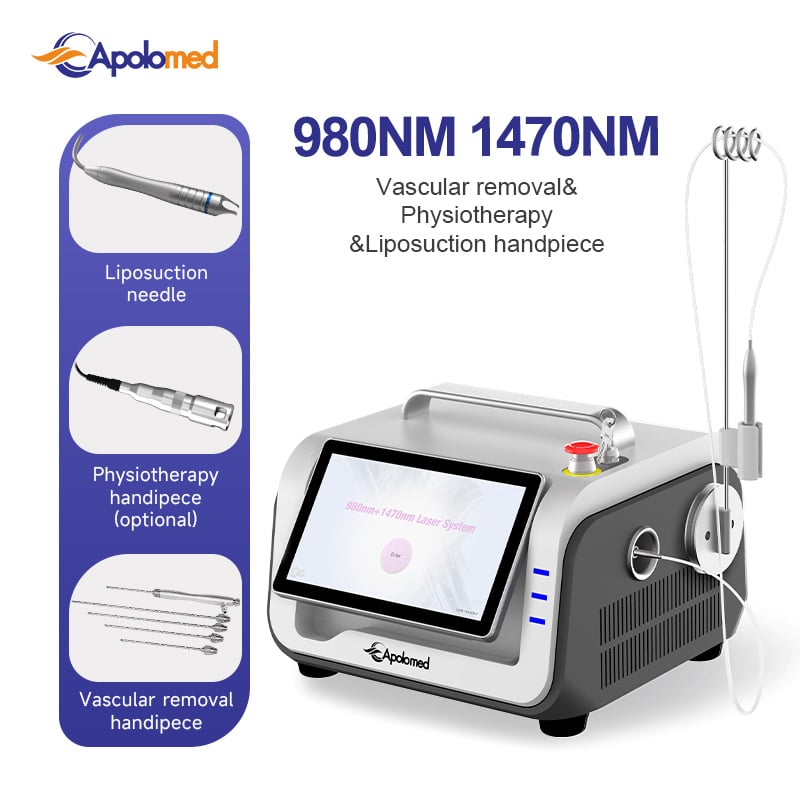
The clinical versatility and consistency of premium endolaser systems, such as advanced platforms by Apolo Med, depend strictly on wavelength synergy and precise energy control.
The integration of 980 nm and 1470 nm dual wavelengths into a single platform delivers a highly efficient treatment cycle:
-
The 980 nm Wavelength: Focuses heavily on coagulation and vascular targeting, effectively sealing micro-vessels to minimize post-treatment bruising and ensure patient safety.
-
The 1470 nm Wavelength: Exhibits a high affinity for water, making it exceptionally efficient at melting localized fat cells and contracting connective dermal tissue simultaneously.
Modern platforms streamline these operations by utilizing intelligent touchscreen interfaces running on robust operating systems. This allows clinicians to adjust pulse durations and power outputs on the fly while monitoring real-time tissue safety parameters. This dual-wavelength compatibility accommodates a wide spectrum of clinical needs—from delicate lower eyelid tightening to expansive abdominal contouring—rendering it a highly valuable asset for growing medical aesthetics practices.
5. Conclusion
Endolaser technology represents a major advancement in non-surgical tissue rejuvenation. By precisely delivering dual-wavelength energy beneath the skin, it bypasses the limitations of topical solutions to shrink, firm, and remodel tissues from the inside out. With minimized recovery times, high customizability across different fiber sizes, and stable safety controls, modern endolaser platforms offer patients a safe, reliable, and highly effective path toward long-term structural skin tightening.